Am I a 4 or a 9? The Most Quietly Confusing Enneagram 4 vs 9 Mix-Up
This is one of the least-discussed but genuinely tricky confusions in the Enneagram. Both types can be introverted. Emotionally deep. Withdrawn. Both can spend hours in their own internal world. Both reject superficiality. Both feel fundamentally different from mainstream culture. From the outside, they look almost identical. The question of enneagram 4 vs 9 has people confused regularly because the types share so much surface similarity. But the difference is direction.
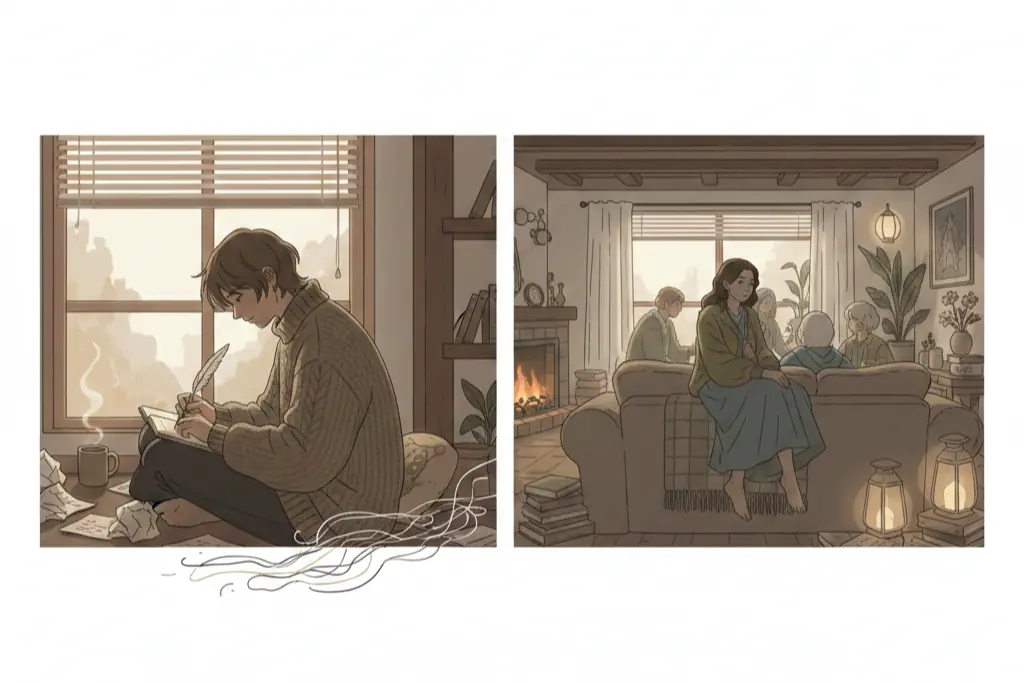
A 4 is preoccupied with their own emotional landscape. They're excavating themselves. They feel their distinctness intensely — their uniqueness, their depth, the ways they're different from everyone else. A 4 in a room full of people is thinking: I'm the only one who feels this way. I'm the only one who gets this. There's something fundamentally other about my experience.
Understanding Enneagram 4 vs 9: The Core Difference
The emotional depth of a 4 and the emotional attunement of a 9 look similar from the outside. The difference is direction: 4s turn inward with their feelings, 9s turn outward. One is excavating themselves; the other is absorbing everyone else.
A 9 is absorbing everyone else's emotional landscape. They're merging with their environment. They feel others' emotions acutely but often can't locate their own. A 9 in that same room is thinking: everyone else seems so clear about what they want. I'm just here. I'm blending. I'm accommodating. And that accommodation is so complete that after a while, they don't know what they would want if they weren't accommodating anymore.
I watched a woman spend three years typed as a 4 before she realised she was actually a 9. She was "deeply emotional, artistic, introverted, and felt like an outsider." Three different Enneagram coaches had typed her as a 4 based on those criteria alone. She had the sensibility. She liked the framework.
But then she read this sentence about Type 9: "You often don't know what you want until someone else expresses a preference, and then you know you want the opposite of that — or the same thing, depending on what feels safer."
She stopped reading. That was the sentence. That was it.
She described spending her whole life with no clear preferences. A restaurant menu was genuinely overwhelming because she didn't have an internal compass pointing toward what she wanted. She'd wait for others to decide, then feel relief or resentment depending on what they chose. She'd absorbed other people's emotions so completely that she couldn't find her own. When she was alone, she'd feel calm but also kind of empty. Not deeply emotional. Empty.
That wasn't a 4. She'd been confusing her sensitivity to others' emotions for her own emotional depth.
The flip side: I know a 4 who was initially mistyped as a 9 because she seemed "calm and easygoing." Her therapist pointed out that the calm was actually a performance. It was a way of keeping people at a distance while she was running constant internal commentary about how different she was from them. How they didn't understand her. How her experience was fundamentally other. That performance of easegoingness was a 4 defence — keeping the world from getting close enough to confirm her fear that she's fundamentally flawed or unseen.
The 4 can look calm from the outside. But underneath, there's constant awareness of their own distinctness. The 9 is calm and also genuinely not aware of their own preferences underneath the calm. Different architecture entirely.
The Tell: How They Handle Disagreement
The most reliable distinction: watch what happens when someone disagrees with them about something they care about.
A 4 will feel it deeply. Probably express it. Or more likely, write about it extensively in private. Journal entries. Texts to close friends. Internal monologues about how nobody understands. The disagreement confirms what they already suspected: they're fundamentally different, fundamentally alone, fundamentally unseen. And they'll excavate that feeling. Turn it into art. Make it mean something.
A 9 will smooth it over. Change the subject. Agree with them. Smile. And wake up two days later realising they're quietly furious, but they can't remember why. They agreed with the person, but something about the interaction violated them. They've lost track of their own position so completely that they can only feel the loss without being able to name it.
When a 4 is in conflict, they go deeper into themselves. When a 9 is in conflict, they disappear into the other person's framework and then feel resentful about it.
Are you a Type 4 or Type 9?
You might be one of them — or a third type entirely. Take the 4-minute test to know for sure.
Find Out My Type →The Contrarian Take: Stop Looking at Aesthetics
Most Enneagram content will tell you that 4s are artistic and 9s are easygoing. So a creative person thinks they're a 4. A peaceful person thinks they're a 9. This is useless.
There are artistic 9s and unarty 4s. The Enneagram isn't about talent or interest. It's about how you locate yourself in reality.
A 4 is constantly aware of being distinct. They might or might not create art from that distinction, but they're absolutely feeling it. Their emotional intensity is inward. They're comparing themselves to others and finding themselves deeply different.
A 9's artistic expression — if it exists — comes from a different place. It's not from the certainty of being different. It's from the freedom that comes when they finally stop accommodating and find their own taste. But they arrive at it circuitously. They don't know they have it until they're alone and nobody's preferences are in the room to shape theirs.
Three Questions to Distinguish Them
-
In a group setting, are you primarily aware of your own internal experience (4) or of how everyone else's energy is affecting the room (9)? This is the deepest distinction. Is your consciousness turned inward or outward?
-
When you're alone with no external input, does a clear sense of what you want emerge (9 discovery) or do you already know what you want and are just managing the world's expectations (4 knowing)? 4s have a strong internal compass. 9s have to excavate it.
-
When someone criticises you, is your first feeling shame (I'm flawed, I'm different, why is this happening to me — 4) or confusion and resentment (I wasn't even aware I had a position until you attacked it — 9)? The 4's shame is about their core distinctness. The 9's confusion is about the discovery that they disappeared.
The Real Difference
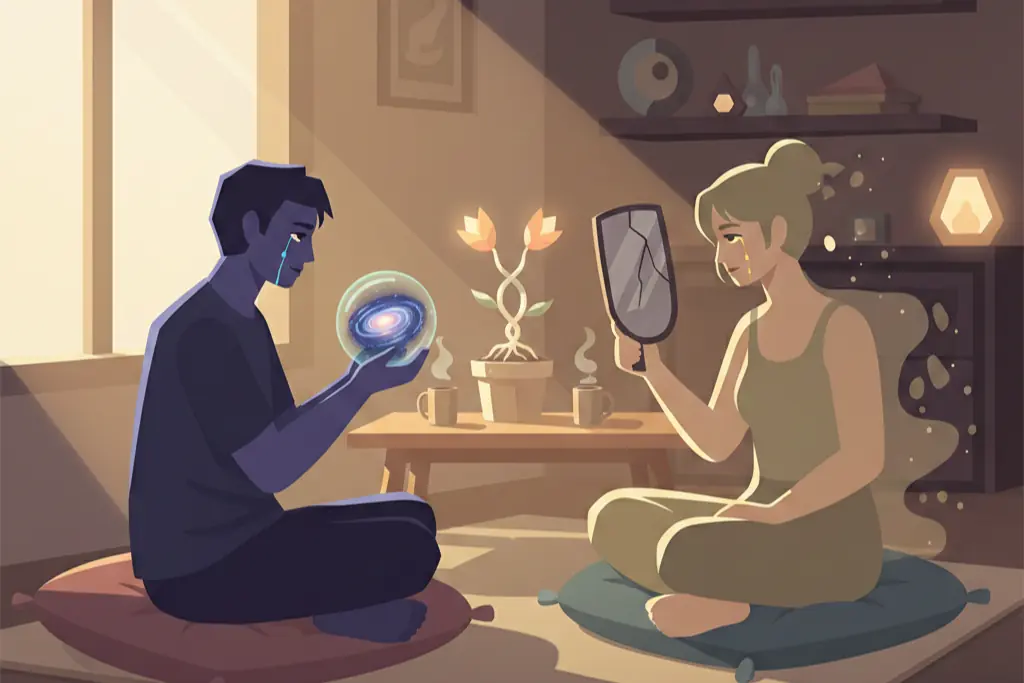
If you're still not sure, ask yourself: do you feel alone because you're fundamentally different (4), or do you feel alone because you've erased yourself trying to fit in (9)?
The answer almost always lands clearly.
Are you a Type 4 or Type 9?
You might be one of them — or a third type entirely. Take the 4-minute test to know for sure.
Find Out My Type →