Enneagram INFJ: Which Type Are You Really?
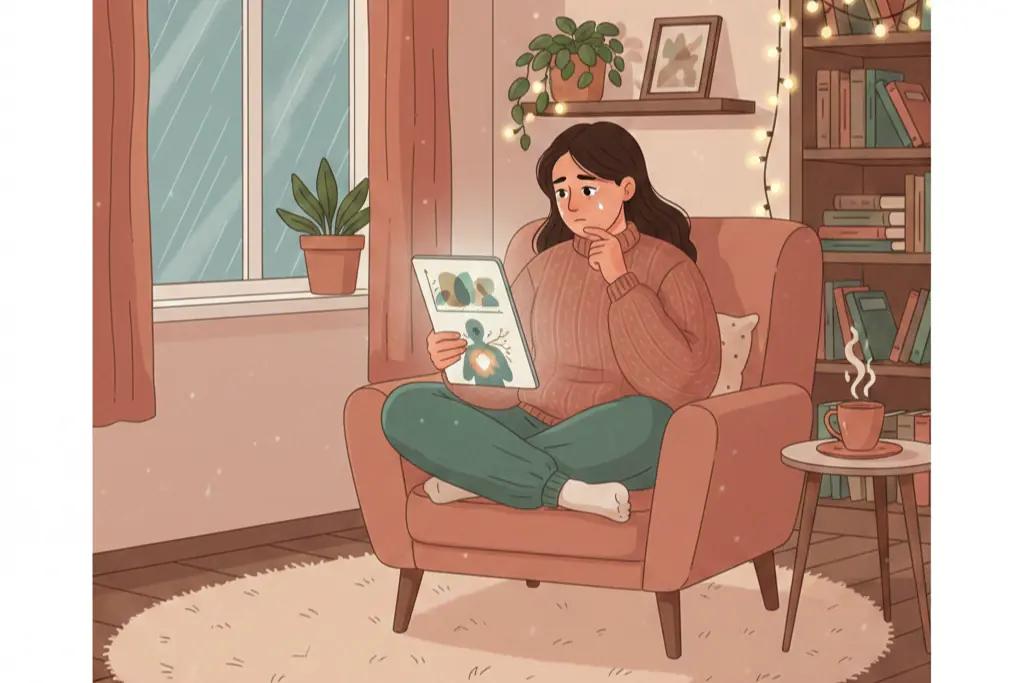
An INFJ sits with her Enneagram INFJ Type 4 description for the first time and realises: this is more accurate than anything Myers-Briggs has ever told her.
Not because one system is better. Because they measure different things.
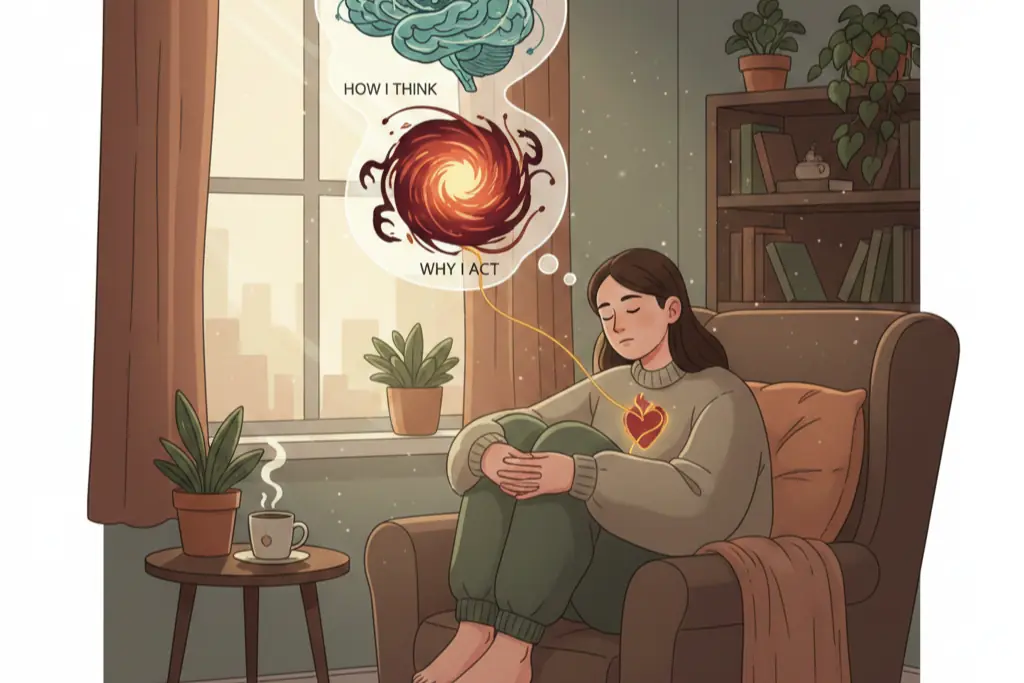
Myers-Briggs tells you how you think — your cognitive function stack, the way you process information, your natural style. Enneagram tells you why you act the way you do — your core motivation, your wound, what you're actually after underneath everything else.
Two INFJs can have the exact same cognitive functions but completely different Enneagram types. And that difference? It explains so much. Understanding your enneagram infj type means understanding what actually drives you.
The Most Common Enneagram INFJ Crossovers
INFJ + Enneagram 4: The Introspective Idealist (Most Common)
This is the most frequent combination for enneagram infj types. Deep identity focus. Feeling fundamentally different from everyone else. Creative. Melancholic. This INFJ experiences the world as a series of meanings and feelings that others can't quite access. They spend time wondering who they really are underneath the INFJ mask. They feel like they see more than they're allowed to express. They're drawn to depth — in books, relationships, ideas.
The 4 wing in particular makes this INFJ introspective and identity-oriented. The 3 wing makes them more achievement-focused and image-conscious, but still with that deep 4 need to understand themselves.
INFJ + Enneagram 1: The Crusading Reformer
Driven by moral vision. Frustrated with incompetence and complacency. This INFJ is angered by injustice in a way that goes beyond the typical INFJ care — it becomes moral imperative. They know what's right and they struggle when the world refuses to align with it. They're the INFJ who becomes a whistleblower, who leaves lucrative careers for principle, who can't compromise on core values.
The difference from the Type 4 INFJ is visible: less introspection, more righteousness. Less "who am I?" and more "how can this be allowed?"
INFJ + Enneagram 2: The Devoted Helper
Highly attuned to others' emotions. Gives excessively. Struggles to receive. This INFJ finds their purpose through service. They can read what others need almost psychically. They've built an identity around being there for people. But underneath the helping is a core belief: "I'm only loveable if I'm useful." Rest feels irresponsible. Asking for help feels like failure.
This is less common than 4 or 1, but when it exists, it's pronounced. The INFJ tends to burn out faster.
INFJ + Enneagram 6: The Anxious Idealist
Less common but it exists. Anxious. Loyal. Deeply concerned with safety, trust, and betrayal. This INFJ experiences the world as more threatening than their 4 or 1 siblings. They're the INFJ who checks plans repeatedly, who's skeptical of others' intentions, who needs reassurance that loyalty is reciprocated.
If you're an INFJ 6, you probably experience more anxiety than the "typical" INFJ description suggests. You might be more risk-averse.
Quick Note on Other MBTI-Enneagram Crossovers
ENTP + Enneagram 7: The Witty Provocateur
The most common ENTP pairing. Curious, scattered, chasing ideas and experiences. Less grounded than an ENTP 5.
INTJ + Enneagram 5: The Strategic Mind
Common for obvious reasons. The deep thinking, the need for mastery, the intensity — it all multiplies.
Curious about your own type?
Take the free Enneagram personality test and get your full profile in minutes.
Discover Your Type →Why This Matters More Than You Think
Myers-Briggs tells you your style. Enneagram tells you your wound.
That's why Enneagram hits differently. It's not flattering. It's accurate.
An INFJ reads "deep, creative, mysterious, future-oriented" and thinks "oh, that sounds nice." An INFJ reads "something is fundamentally missing in you, you feel like you don't belong, you'll spend your life trying to find what's wrong" and recognises themselves so completely that they cry.
One describes your toolkit. The other describes your pain. One tells you how you think. The other tells you what you're afraid of and how you've learned to survive it.
How to Figure Out Your Enneagram INFJ Type
Ask yourself: What's your core fear underneath everything?
Type 4: That you're fundamentally broken or missing something. Type 1: That you or others are wrong, incompetent, or failing at goodness. Type 2: That you're only valuable when you're helping someone. Type 6: That the world is dangerous and people will betray you.
What happens when you're under sustained stress?
Type 4 INFJ: Withdraws deeper into yourself, becomes more isolated, romanticizes the loneliness. Type 1 INFJ: Becomes critical, rigid, more judgmental of self and others. Type 2 INFJ: Exhausts themselves helping, then resents others for not reciprocating. Type 6 INFJ: Becomes hypervigilant, suspicious, reads malicious intent into neutral situations.
What actually motivates you?
Type 4: Understanding yourself and what you're missing. Type 1: Making things right. Fixing what's broken. Living with integrity. Type 2: Being needed. Being essential. Being loved through service. Type 6: Safety. Trust. Loyalty. Preparation for threat.
When you're proud of yourself, what for?
Type 4 INFJ: Authenticity. Creating something unique. Understanding something deeply. Type 1 INFJ: Doing the right thing. Maintaining integrity. Improving something broken. Type 2 INFJ: Being there when someone needed you. Making someone feel seen. Type 6 INFJ: Being prepared. Having their loyalty paid back. Protecting someone.
The Real Difference
You came to this article as an INFJ. You'll leave it as an INFJ and.
INFJ and Enneagram 4. INFJ and Enneagram 1. INFJ and Enneagram 2.
Each one is an INFJ. But each one hurts in a different way. Hopes for a different thing. Builds their life around a different core belief.
Understanding which enneagram infj type you are means understanding what you're actually looking for underneath all of it.
Explore your Enneagram type more deeply to understand how your childhood shaped you and what you look like under stress.
Curious about your own type?
Take the free Enneagram personality test and get your full profile in minutes.
Discover Your Type →