Enneagram vs Myers-Briggs: One Told Me Who I Was. The Other Told Me Why.
The first time I took the Myers-Briggs, I got ENFJ.
The description was almost embarrassingly accurate. Warm. Empathetic. Attuned to other people's needs. Natural communicator. I printed it out. I showed it to friends. I genuinely felt understood — like something that had always been vague about me had finally been given a name.
For about three years, ENFJ was my answer to the enneagram vs myers-briggs question. It told me who I was. That felt like enough.
Then I took the Enneagram and got a result that made me put my phone down.
Not because it was negative. Because it was specific in a way that the MBTI had never been. It didn't just describe what I did. It described the fear underneath it. The thing driving the behaviour. The part I'd been politely not looking at.
That distinction — motivation versus behaviour — is the whole thing. And once you see it, the question of which test is "better" stops making sense.
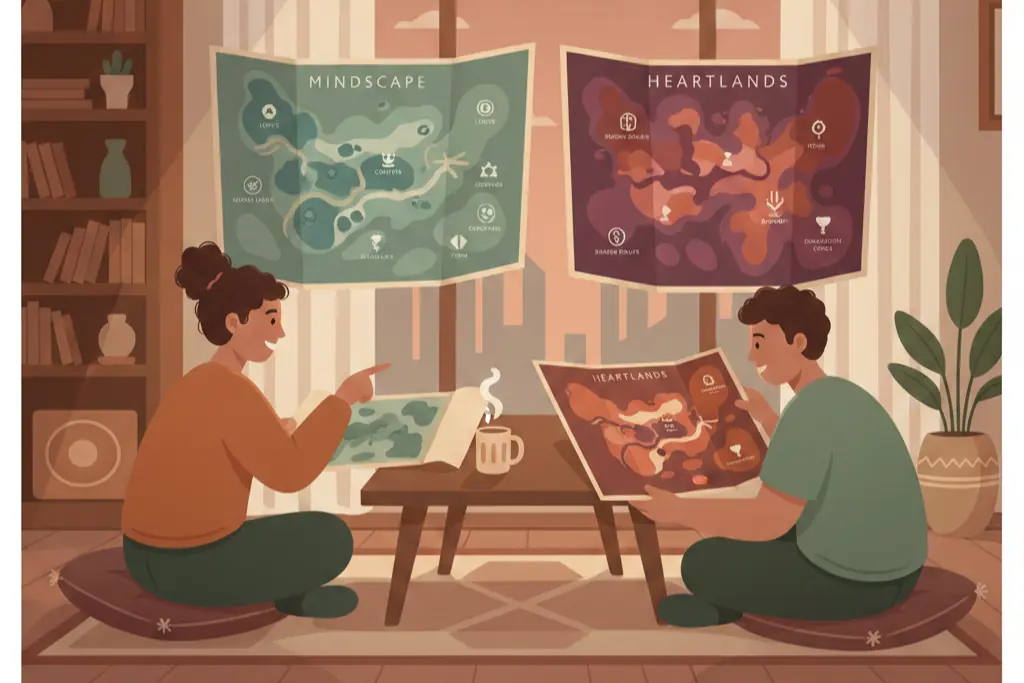
The Enneagram vs Myers-Briggs Problem: They're Not Measuring the Same Thing
MBTI tells you how you prefer to take in information, make decisions, direct energy, and structure your life. Those are real, observable patterns. The ENFJ result wasn't wrong — I genuinely do lead with feeling over logic, and I genuinely do prefer structure over ambiguity. These things show up in how I talk, how I work, how I make decisions under pressure.
What MBTI doesn't tell you is why those patterns are so strong. Why an ENFJ might override their own preferences to accommodate someone else's. Why the "warmth" can tip into people-pleasing. Why the attunement to others sometimes looks less like empathy and more like anxiety.
That's where the Enneagram comes in.
The Enneagram maps core fear and core desire — the engine underneath the behaviour. Two people with identical MBTI profiles can have completely different Enneagram types, which is why two ENFJs can seem so similar on a team-building assessment and so different in a crisis. One is motivated by the desire to be loved. The other by the need to be right. Same surface patterns. Completely different internal architecture.
I spent a long time not understanding why my "warmth" would sometimes leave me exhausted and resentful. The MBTI profile couldn't explain it because resentment wasn't part of the output — the model wasn't built to go there. The Enneagram explained it on the first read. (If people-pleasing is the piece you recognise most in yourself, I went deeper into that pattern in this piece on what's underneath it — it's more specific than anything I'd found in MBTI literature.)
Where MBTI Still Wins
Here's the part that usually gets left out of the enneagram vs myers-briggs conversation: MBTI is genuinely better for some things.
For workplace team dynamics, hiring assessments, and understanding communication styles between colleagues, MBTI is cleaner. It's less threatening. It doesn't ask anyone to examine their childhood wound in a Tuesday afternoon offsite. The categories are descriptive, not diagnostic, which makes them easier to apply in professional contexts without things getting unexpectedly personal.
I've also found MBTI more reliable for predicting preference — how someone is likely to approach a task, whether they need to think before speaking or think by speaking, whether they find open-ended work energising or destabilising. These aren't deep insights, but they're practically useful.
The Enneagram is less suited to this. It's better as a private tool than a group exercise. The descriptions hit differently depending on how much self-awareness someone has already developed, and a mistype — which is very common — can send someone in entirely the wrong direction for years. (That's a bigger problem in the Enneagram than in MBTI precisely because the stakes are higher. Misidentifying your MBTI type is inconvenient. Misidentifying your Enneagram type means misunderstanding the fear that's been running your life.)
Curious about your own type?
Take the free Enneagram personality test and get your full profile in minutes.
Discover Your Type →The Version of This I Find Most Striking
It comes up most clearly at work.
MBTI and DISC get used constantly in hiring and team-building — they're mainstream, HR-approved, easy to administer. And they do a reasonable job of mapping how someone functions in a role. But they can't explain why the same interpersonal patterns follow people from job to job. Why the same conflicts keep arising with authority figures, regardless of which authority figure. Why someone who's clearly talented keeps self-sabotaging at the exact moment a promotion is possible.
That's enneagram territory. And the difference becomes especially visible under pressure — stress, change, high stakes. MBTI describes your baseline operating mode. The Enneagram describes what happens when that baseline gets destabilised. If you've noticed a pattern like that in your own working life, this piece on what your type keeps recreating at work gets into it directly.
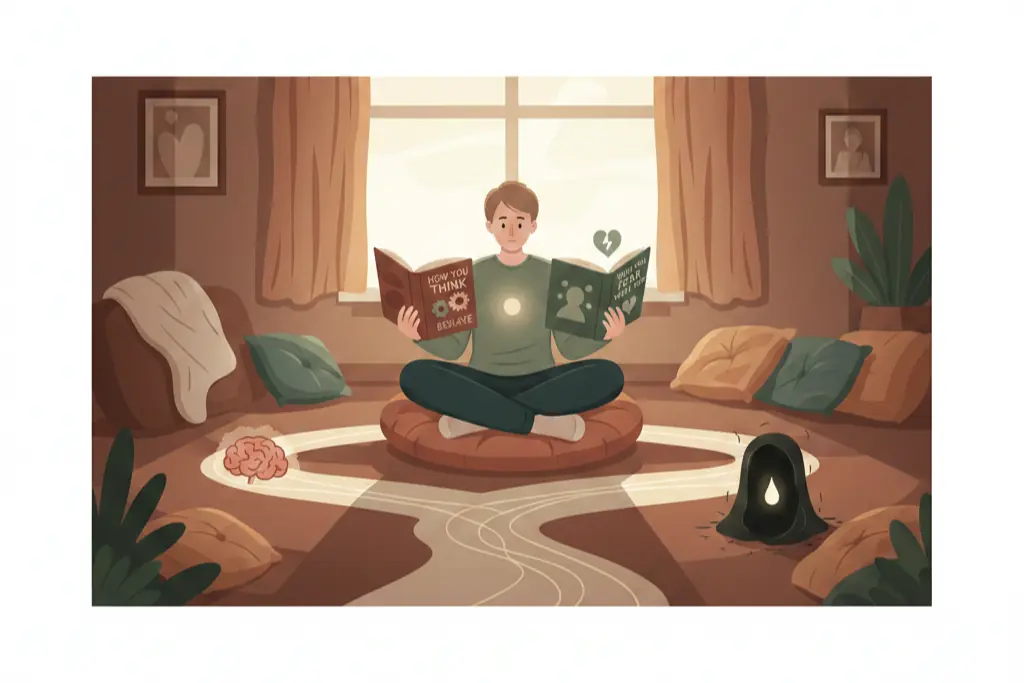
So Which One Should You Take?
Both, in the right order.
Start with MBTI or DISC if you want a practical snapshot of your working style — something you can apply immediately in a professional context. Then take the Enneagram when you're ready for a more uncomfortable conversation. Use it as a tool for understanding motivation rather than for labelling personality.
And if the Enneagram result makes you put your phone down for a second: that's probably the right type.
One note worth adding: the accuracy of an Enneagram result depends heavily on the quality of the assessment. Many free tests online are short enough to mistype you fairly easily, especially if you're a type with strong lookalike patterns (6 and 9, 3 and 7, 2 and 4 are the most common mistyping pairs). The assessment at myenneagramtest.org uses a significantly larger dataset and provides a full breakdown including wings and instinctual variants — which is relevant precisely if you're trying to understand the why rather than just get a label.
Curious about your own type?
Take the free Enneagram personality test and get your full profile in minutes.
Discover Your Type →