Enneagram Instinctual Variants: Why the Same Type Can Look Like Three Different People
Enneagram instinctual variants are the reason two people with the same type number can seem like completely different people. They're also the most underexplained layer of the system.
I have two close friends who have both tested as Enneagram Type 6.
The first tracks her finances obsessively, has an emergency fund she's been adding to since her mid-twenties, and has strong opinions about which neighbourhoods are safe to walk through at night. She is warm, funny, deeply loyal — but underneath all of it is a constant low-level attention to whether things are okay, physically and practically. She knows where the first aid kit is in every building she spends time in.
The second barely knows what's in his bank account. What he tracks instead is the room — who's in conflict with whom, where he stands in any given group, who's building something he might want to be part of. He's intensely socially aware in a way that looks nothing like anxiety. But watch him when he feels excluded or when a community he belongs to is under threat, and the Six fear comes through unmistakably.
Same type. Completely different people. The explanation is enneagram instinctual variants — and they're the layer of the system most people never reach.
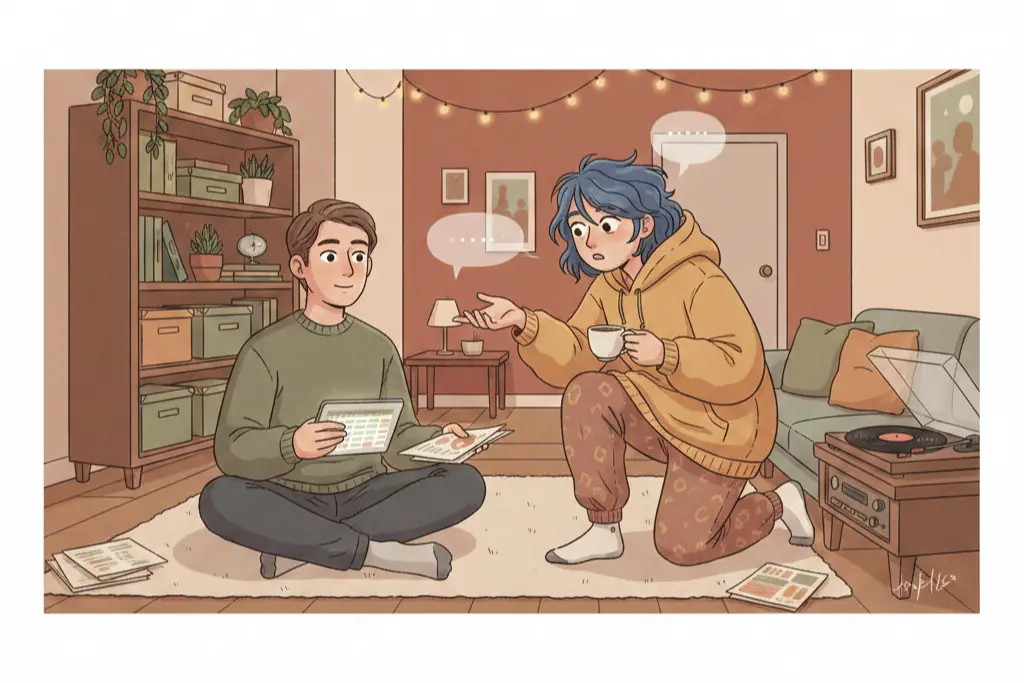
What Enneagram Instinctual Variants Actually Are
Before personality, before Enneagram type, before even the core fears that T. Sato mapped out in the guide to all nine types — there are three fundamental survival drives that every human being carries. These drives are older than psychology. They're wired in: the drive to protect yourself and your resources, the drive to belong to a group, and the drive to bond intensely with individuals.
In Enneagram language these are called the instinctual variants:
-
SP — Self-Preservation. Attention goes to safety, health, comfort, resources, physical security. The body's survival needs. SP types are often highly practical, attuned to what could go wrong materially, and can seem more grounded or cautious than other people of the same Enneagram type.
-
SO — Social. Attention goes to the group — belonging, roles, hierarchy, reputation, who's in and who's out. SO types are often highly aware of social dynamics and their position within them. Contrary to what the name suggests, they're not necessarily extroverted — they're tracking the group, which is different.
-
SX — Sexual (One-to-One). Attention goes to intensity and deep individual connection. SX types pour their energy into whatever or whoever they value most, and they seek a quality of aliveness — a merger with what matters — that can make them seem unusually intense or magnetic. "Sexual" here is a shorthand for one-to-one bonding drive, not libido specifically.
Everyone has all three instincts. What varies is the dominant one — and it colours your core Enneagram type in ways that can make you look quite different from someone who shares your number.
The Three Variants in Practice
The easiest way to understand this is to take one type and run it through all three.
Take Type 2 — the type organised around the fear of being unloved or unwanted. M. Ellison's piece on Enneagram wings touches on how even two Twos with different wings can seem like different people. The variants take this further.
An SP Two expresses care primarily through practical provision. They cook for you. They make sure you have what you need before you've thought to ask. Their love language is anticipating your physical needs, and they can be more private and less overtly effusive than the stereotype of the warm, gushing Two would suggest.
An SO Two is the natural networker, the person who knows everyone and whose currency is connection. They give in ways that are visible and socially meaningful — they introduce you to people, show up at the right moments, are known in their community as the person who holds things together. Their giving has a social architecture to it.
An SX Two pours their entire energy into a small number of people or causes and can seem almost overwhelming in the intensity of their attention. They don't maintain a broad network — they merge. The relationship they're in takes up enormous psychological space, and they can become entirely focused on one person to the point where their own needs become invisible even to themselves.
Three flavours of the same core fear. Three very different lives.
Curious about your own type?
Take the free Enneagram personality test and get your full profile in minutes.
Discover Your Type →Why This Is the Piece That Makes the Type Click
If you've ever taken an Enneagram test, read the description for your result, and thought: this is 80% right but 20% doesn't fit at all — there's a good chance the missing 20% is your instinctual variant.
Type descriptions are written for the average of the type. They blend SP, SO, and SX expressions together into a composite. For some people this hits perfectly. For others it produces a description where half of the specifics land and the other half seem to belong to someone else.
A counter-phobic SP Six looks significantly different from a social SO Six. A self-preservation Four reads as more contained and practically oriented than the archetypal melancholy Four of popular Enneagram content, who is typically written as an SX. An SO Seven, oriented around being a generative presence in their community, can seem more responsible and less chaotic than the classic Seven archetype — because the social drive is doing real work alongside the Seven's enthusiasm.
The variant doesn't change the core type. It changes the direction the core type's energy flows.

The Hardest One to Spot
SX — the one-to-one variant — is the most commonly misunderstood, and the most likely to generate the "I don't quite fit my type" feeling.
SX types can mistype several numbers higher or lower than their actual type, because the intensity of the SX drive overlays the core type's fear in ways that look like different types entirely. An SX Nine, who merges with whoever they're focused on, can look like a Two. An SX Five, who pours intense focus into an idea or person, can look like an Eight. The SX drive is so strong that it can temporarily mask the underlying type.
If your test result feels directionally right but off in a specific way — and particularly if people have told you that you seem more intense than your type description suggests — SX is worth investigating.
Instinctual variants are rarely assessed well in short tests. A proper Enneagram assessment should include a variant result alongside your core type and wing. myenneagramtest.org includes SP/SO/SX identification as part of its full breakdown — which is relevant precisely because the variant is often the piece that makes the type description finally make sense.
Curious about your own type?
Take the free Enneagram personality test and get your full profile in minutes.
Discover Your Type →