Why Enneagram Type 2 Narcissist Relationships Form (And How to Break Free)
It's 2 a.m. on a Thursday and Marcus is doing his girlfriend's laundry.
Not because she asked. Not because he wanted to. But because if he didn't, she'd be upset, and if she was upset, maybe she'd leave, and if she left, he'd be alone, which was worse than any amount of tiredness.
This is the pattern. And understanding how enneagram type 2 narcissist relationships work reveals a truth that few want to acknowledge: the connection isn't accidental. It's structural.
The relationship between enneagram type 2 narcissist dynamics isn't accidental. It's predictable. And it happens because the Type 2's deepest belief lines up perfectly with what a narcissist actually needs.
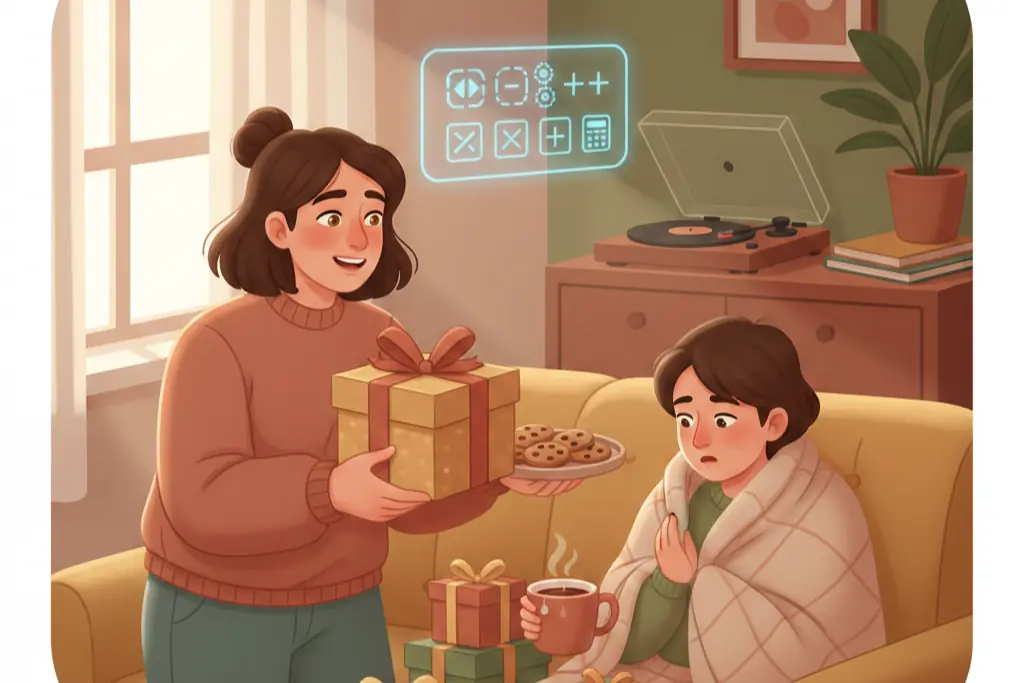
Why the Enneagram Type 2 Narcissist Dynamic Forms
A Type 2's core wound is this: "You only matter when you're useful."
They learned in childhood that love must be earned through service. That their needs don't count. That their value comes from what they do for others. So they built a life around making themselves indispensable.
A narcissist walks into that and sees a perfectly designed appliance. Someone who will give endlessly. Someone who has already internalised the belief that their job is to make the narcissist's life work. Someone who will interpret cruelty as challenge and coldness as mystery that they can solve through better giving.
The narcissist gets unlimited attention, admiration, and service without having to reciprocate. The Type 2 gets the feeling of being needed, which they've confused with being loved. The intensity feels like love at first because being needed is intoxicating for someone who believes that's the only way they matter.
It's a terrible trade. But it feels like home.
What an Enneagram Type 2 Narcissist Relationship Looks Like in Practice
A Type 2 starts dating someone who's charming, confident, maybe a little self-absorbed. Flags everywhere. But the Type 2 isn't looking at flags. They're looking at potential. They're already imagining how they'll help this person become better. How they'll be so essential that the person will have to love them back.
They adjust their schedule around the narcissist. Cancel plans with friends. Listen for hours while the narcissist talks about themselves. Never bring up their own struggles because the narcissist's problems are always more dramatic, more urgent, more real.
When the narcissist is cold, the Type 2 works harder. Maybe they haven't given enough yet. Maybe if they try a different angle, finally get the gesture right, the narcissist will show appreciation. The moving target keeps them running.
They interpret criticism as proof that the narcissist cares enough to correct them. They interpret distance as a challenge. They interpret the narcissist's occasional praise (after lots of effort) as evidence that the love is real — it's just earned, contingent, conditional. The way all love is, right?
A Type 2 named Jennifer spent three years managing her boyfriend's emotions. She got his coffee the exact right way. She listened to his work complaints for hours while he never asked about hers. When she was sick, he was annoyed. When he was sick, she reorganised her entire week.
On rare occasions, usually when he needed something, he'd be charming and affectionate. She'd hold onto those moments like proof. See? He does love me. This is what we're building toward.
Curious about your own type?
Take the free Enneagram personality test and get your full profile in minutes.
Discover Your Type →The Moment Everything Breaks
It usually happens like this:
Something shifts. Maybe the Type 2 gets sick. Or they have a real crisis. Or they accidentally let something slip about how exhausted they are. And they ask for something small. Just once.
And the narcissist reacts with indifference. Or anger. Or dismissal.
And the Type 2 realizes: I have given everything and it was never enough.
That "never enough" was the point. It kept them giving.
A Type 2 man named Derek had spent five years being the person everyone called in a crisis. His ex, his friends, his family — they all relied on him. But he had no idea what he actually liked. What he wanted. Who he was when he wasn't helping someone.
He'd constructed his entire identity out of other people's needs. And when his ex left him for someone who was paying them attention, he didn't fall apart because he lost the relationship. He fell apart because he lost his purpose. Suddenly he was just existing. With no function. Which meant no value.
The Contrarian Take
Everyone tells Type 2s the same thing: "You need to set boundaries. Learn to say no. Put yourself first."
But boundaries require a self to defend. And the Type 2's core wound is that they don't have a self — they've spent their life building an identity out of other people's needs, not their own.
The work isn't learning to say no. It's learning that you exist when you're not helping someone.
That's the real work. And it's not quick.
It means sitting with the discomfort of having needs. Of disappointing people. Of being less than maximally useful. Of being present in a way that's not productive. Of discovering that you have preferences, opinions, desires that have nothing to do with anyone else.
It means mourning the belief that if you just give enough, someone will finally love you completely. They won't. A narcissist definitely won't. But neither will anyone else — because love that's earned through constant performance isn't love. It's a transaction.

The Real Healing
A Type 2 healing from an enneagram type 2 narcissist relationship doesn't need another relationship where they can be more useful. They need solitude. Boring solitude. The kind where there's nothing to do and nowhere to go and just them.
They need to sit with the discomfort of existing without a function. To find out what they like when no one else is there to need them.
They need to understand that the people worth keeping will care about them even on days when they're tired, sick, sad, or just sitting on the couch doing nothing. The people worth keeping will ask about their day. Will notice when they're overwhelmed. Will offer help without keeping score.
A healthy relationship doesn't require constant earning. It requires reciprocity.
And a Type 2 has to learn that they deserve reciprocity. Not because they've earned it through sufficient usefulness. But because they exist.
That's the thing they're still learning. That's always been the thing.
Learn more about how Type 2s form core wounds in childhood and explore healthy relationship patterns.
Curious about your own type?
Take the free Enneagram personality test and get your full profile in minutes.
Discover Your Type →