The Helper Who Can't Ask for Help: The Paradox of Enneagram Type 2
I watched Sarah spend six hours organizing a birthday party for Marcus. She decorated his apartment. Bought the cake. Coordinated fifteen people. At 11 PM, after everyone left, I asked if Marcus had done anything to help her set up. She laughed. "Of course not. That's not what I was there for."
Three days later was Sarah's birthday. Marcus texted: "Where do you want to go for dinner?" She said "anywhere is fine." He picked a sushi place. She hates sushi. She didn't mention it. She sat there smiling, eating california rolls, and felt invisible.
This is the enneagram type 2 in its purest, most painful form. Not the caricature of the nurturing friend who brings soup. The actual lived experience: the person who has trained themselves so thoroughly to care about everyone else's comfort that they've forgotten how to ask for their own.
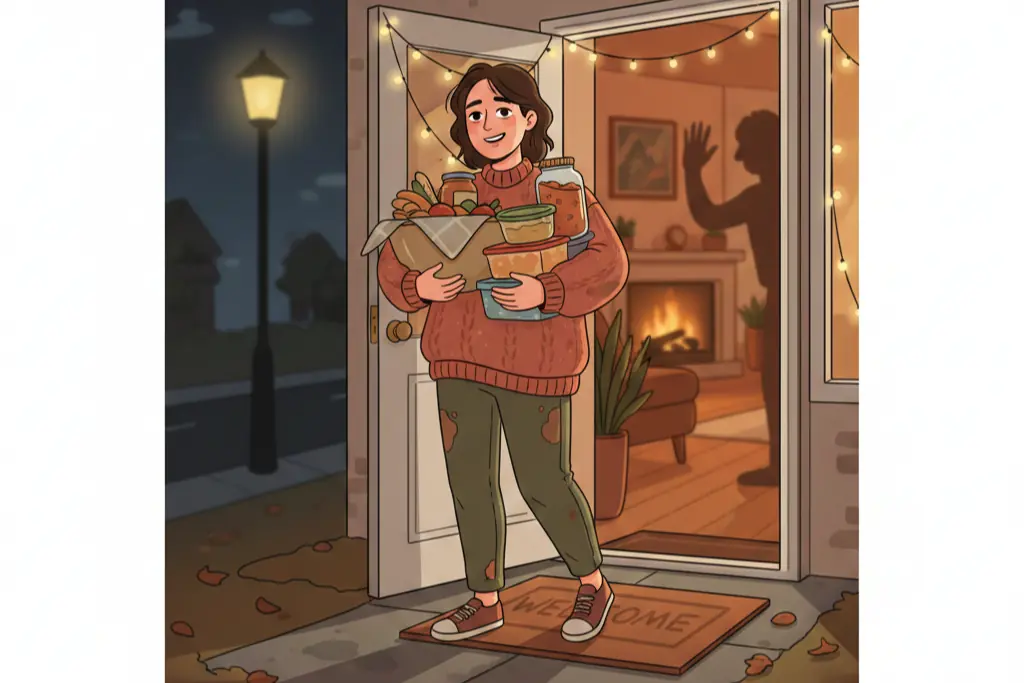
What Enneagram Type 2 Actually Feels Like
The core motivation of an enneagram type 2 personality isn't generosity. It's a terror of being unlovable. Types read as helpful, but the engine running underneath is: If I'm useful enough, if I give enough, if I notice what you need before you do, maybe you'll love me. Maybe I'll finally matter.
Here's my actual take: the mainstream advice to "just set boundaries" is useless for Type 2s until you address the real problem. Boundaries require self-worth. And most Type 2s don't have baseline self-worth—they have earned worth, which is infinitely fragile. You can't tell someone who believes their value is conditional on service to simply stop serving. That's like telling someone afraid of heights to just climb a ladder.
The Type 2 collapse happens slow. First, they notice nobody remembers their coffee order. Then they notice nobody asks about their day. Then they notice they don't actually know what their own day is, because they've been so busy tracking everyone else's mood. At some point, they disappear so completely that even they can't find themselves anymore.
Last year I talked to Devon, a Type 2 who worked in nonprofit fundraising. She was brilliant at her job—she could read a donor in thirty seconds, know exactly what story would move them, what question would unlock their wallet. Outside of work, she had no opinions. Actually, that's not true. She had opinions. She just never spoke them. When her partner would ask what she wanted for dinner, she'd say, "I'm happy with whatever makes you happy." Year three of this, her partner asked if she ever actually wanted anything. Devon cried. She couldn't remember.
The Type 2 Strength Everyone Misses
Yes, Type 2s are generous. Yes, they're perceptive. But here's what doesn't get said: they're seeing people in a way most of us aren't. They notice when you're stressed. They know your third cousin's name. They understand the emotional subtext of a conversation while everyone else is still on the surface.
That's not a weakness. That's a superpower that's been weaponized against them.
But the real strength—the one that could save a Type 2—is that they're capable of incredible growth. When a Type 2 decides that their own needs matter as much as anyone else's, the energy becomes unstoppable. Because they already know how to care deeply. They already understand relationships. They just redirect that capacity inward.
I'm tired of how this gets framed as self-love. "You need to love yourself first" sounds wise until you're sitting in a Type 2's therapy session and they say, "I don't know how to do that. My brain doesn't work that way." Self-love is abstract. But value—actual, concrete value—that's something a Type 2 can work with. You matter because you exist, not because of what you produce.
Curious about your own type?
Take the free Enneagram personality test and get your full profile in minutes.
Discover Your Type →The Wings: Type 2w1 and Type 2w3
Enneagram type 2 expression shifts depending on your wing. A Type 2w1 leans into righteousness. They help, but with a moral edge. There's a correct way to live, and they're helping you toward it. This can come across as judgmental because, underneath, they're judging themselves most brutally.
A Type 2w3 is the ambitious helper. They help because it makes them look good. Their generosity is real, but it's also a performance. They're doing good things and making sure you know about it. W3s are the Type 2s who'll mention their volunteer work three times in a conversation.
Neither version solves the core problem. The wings just change the flavor of the self-erasure.

How This Actually Resolves
It doesn't resolve through willpower or better boundaries. It resolves when a Type 2 gets tired. When they reach the point where the cost of being invisible is higher than the risk of being seen. When they finally ask for something small—like an honest answer to "What do you actually think of this?"—and don't die when they get it.
The pathway isn't "love yourself." It's "notice that you matter." Start there. That's the unseen work.
Worth reading alongside X. Nkosi's earlier piece on people pleasing for more on why Type 2 dynamics show up in people-pleasing patterns. For more on the full spectrum of types, check out our complete Enneagram types guide. And if you're a Type 2, explore your specific wing: Type 2w1 or Type 2w3.
Curious about your own type?
Take the free Enneagram personality test and get your full profile in minutes.
Discover Your Type →