Tommy Shelby Enneagram Type 8: Why You Admire a Man Who Can't Feel Anything
There's a scene in Peaky Blinders where Tommy Shelby confesses to Grace that he panics in certain situations. Then he adds: "But nobody sees it."
That line is doing more psychological work than most entire seasons of television. It tells you three things simultaneously. He feels fear. He considers fear unacceptable. And the gap between those two facts is where his entire personality lives.
Tommy Shelby is the most aspirational character in modern television for a generation of men who've turned him into a sigma male icon, a motivation-clip staple, and a wallpaper on approximately six million phones. They admire the strategy. The composure. The absolute refusal to flinch. What most of them don't realise is that they're admiring a man who is psychologically broken in ways that the show is quite explicit about, and that the thing they want to emulate — that ice-cold control — is a trauma response wearing a very expensive suit.
The Tommy Shelby Enneagram typing is Type 8 — The Challenger — with a 9 wing. And understanding what that actually means, rather than what the motivational clips suggest, is the difference between watching Peaky Blinders as entertainment and watching it as a masterclass in how trauma builds a personality.
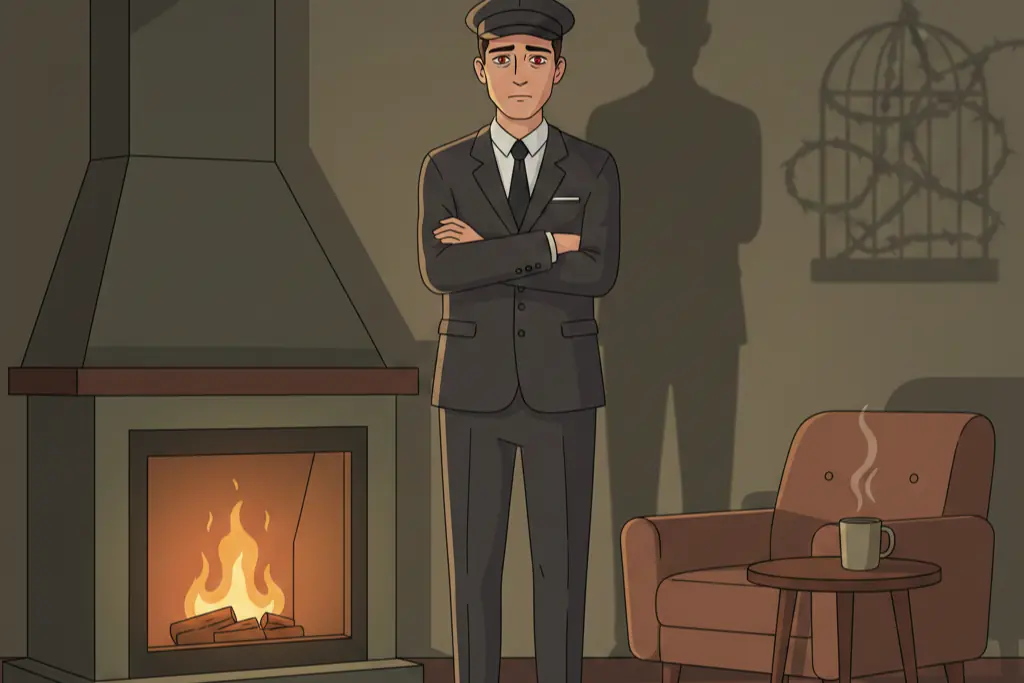
The Type 8 Who Was Built in the Tunnels
The Enneagram Type 8 — The Challenger — has a core fear that explains everything about how they move through the world: the fear of being controlled or harmed by others. Eights respond to this fear by becoming the strongest thing in every room they enter. Not strongest physically — although often that too — but strongest in terms of will, strategy, and the willingness to absorb damage without showing it.
Steven Knight, the show's creator, gave the key to Tommy's psychology in an interview: before the war, Tommy was spiritual, connected to nature and horses, sensitive in ways his brothers weren't. Then he spent years tunnelling under enemy lines in France — in the dark, underground, placing explosives while the earth shook above him — and the war "blasted everything out of him." Knight also revealed that Tommy had put a gun to his head before the series even begins and decided to carry on.
What you're watching, from the first episode onward, is not a man who was born cold. It's a man who was rebuilt by trauma into the shape that would survive. The sensitivity didn't disappear. It got buried under the only structure that kept him alive: control.
"I think, Arthur. That's what I do. I think." That line isn't a boast about intelligence. It's a statement about survival strategy. Arthur punches. Tommy plans. Both are responding to the same fear — being vulnerable, being caught off guard, being at someone else's mercy. Arthur's response is the Type 8 going external: confront, overwhelm, dominate. Tommy's response is the 8w9: think, strategise, control from a position of calculated calm.
His leadership of the Peaky Blinders is pure Type 8 architecture. He never reveals his full hand. He uses loyalty tests. He creates situations where others believe they have power while he holds the actual leverage. He keeps allies close by making them need him, and he keeps enemies off balance by never being where they expect.
"Everyone's a whore, Grace. We just sell different parts of ourselves." That's a Type 8's transactional worldview — the belief that everything is exchange, everything is leverage, and sentimentality is a luxury that gets people killed.
Why the 9 Wing Matters More Than You Think
If Tommy were a pure 8 — or an 8w7 — he'd be Arthur. Loud, reactive, running on adrenaline and rage. The 9 wing is what makes Tommy Tommy.
Type 9 adds withdrawal, patience, and a surface calm that masks the volcanic interior. Where Arthur erupts, Tommy waits. Where Arthur fights, Tommy manoeuvres. The 9 wing gives him the strategic patience that makes him terrifying — the ability to sit in a room with someone who wants to kill him and show absolutely nothing.
It also explains his fundamental loneliness. Nines merge with their environment and withdraw from conflict they can't control. Tommy's version of this is the emotional suppression that Knight describes as being "frozen inside." He can't stop it. He doesn't know how to be the person he was before the tunnels. The 9 wing makes the suppression feel natural rather than forced — it's not that he's actively hiding his feelings, it's that the feelings have been numbed at a level below conscious choice.
His trademark calm isn't stoicism. It's dissociation. And the difference matters enormously. Stoicism is a philosophy you choose. Dissociation is a trauma response that chooses you. Tommy doesn't control his emotions because he's wise. He controls them because losing control, in the tunnels, meant everyone died.
Under stress, Type 8 moves toward the unhealthy side of Type 5 — becoming more withdrawn, more cerebral, more isolated. Watch Tommy in the later seasons and you see exactly this: retreating into his mind, trusting no one, running scenarios endlessly, unable to connect with the people who actually love him because connection requires the vulnerability he killed in France.
Are you a Type 8 like Tommy Shelby?
Only 6-8% of people share Tommy's type. Take the 4-minute Enneagram test to see if you're one of them.
Am I a Type 8? →The Relationships That Prove the Typing
Tommy's three major relationships map the Eight's attachment pattern with devastating clarity.
Grace is the idealised love — the one person who got past his defences before the defences became permanent. Her death didn't just grieve him. It calcified his emotional life into a before and after. He doesn't mourn Grace the way a healthy person mourns. He preserves her as an icon, talking to her portrait, measuring every subsequent woman against a ghost. That's an Eight's relationship with lost vulnerability: once the door closes, it doesn't reopen. It gets sealed and memorialised.
Lizzie is the devoted partner he can't fully love — not because he doesn't feel anything for her, but because loving her would require being present, being soft, being the person he was before the tunnels. Steven Knight has said Tommy "doesn't love himself," and that unloveability radiates outward. He treats Lizzie with a transactional distance that isn't cruelty so much as incapacity. He literally cannot access the part of himself that would make the relationship work.
May is the secure mismatch — intelligent, capable, genuinely fond of him, and fundamentally unable to reach the part of Tommy that matters. She represents what a healthy relationship could look like if Tommy were a different person. He isn't.
The pattern across all three: Tommy equates love with devastation. The one time he was truly vulnerable, the person died. The Eight's lesson — confirmed, in the most brutal way possible — is that vulnerability kills. Every relationship after Grace is an unconscious project to prove that conclusion correct.
"If you apologize once, you do it again and again and again. Like taking bricks out of a wall." That line is the Eight's deepest fear expressed as policy. Vulnerability isn't a single act. It's a structural weakening. One brick comes out and the whole wall follows. And the wall is all that's standing between Tommy and the boy in the tunnels who wanted to die.
The Sigma Male Problem
This is the part where the motivational clips get it wrong.
Tommy Shelby has become a cultural symbol of the sigma male ideal — the lone wolf who operates outside the hierarchy, answers to no one, and wins through strategic brilliance and emotional control. TikTok edits set his monologues to dark music. Instagram accounts use his quotes as captions for gym selfies.
And they're admiring a man who, by the show's own accounting, is deeply miserable. Who has put a gun to his head. Who hallucinates his dead wife. Who tells a therapist there's "a part of me that is unfamiliar to myself." Who drinks himself into oblivion. Who cannot hold a relationship, a friendship, or a moment of peace without engineering its destruction.
The irony isn't subtle. The thing that makes Tommy compelling on screen — the absolute control, the emotional flatline, the chess-move approach to human interaction — is the thing that's destroying him within the narrative. The show isn't asking you to be like Tommy Shelby. It's asking you to understand what made him this way and to feel the tragedy of it.
A healthy Type 8 integrates toward Type 2 — becoming genuinely protective, nurturing, using their strength to care for others rather than to dominate. Tommy occasionally glimpses this — his protective instinct toward his family, his tenderness with his horse, his fleeting moments of vulnerability. But he can't sustain it. The Eight's fear pulls him back. The 9 wing numbs the feeling before it can take root. And the trauma underneath both ensures that any movement toward softness feels like walking back into the tunnels.
What you're actually admiring, when you admire Tommy Shelby, is a survival mechanism. A very effective one. But a survival mechanism is not a personality. It's a replacement for the personality that was destroyed.

What His Type Tells You About Yours
If you're a Type 8, Tommy's story is a mirror you should look at carefully.
The parts you recognise — the need for control, the difficulty with vulnerability, the conviction that strength means never showing weakness — are real. They're part of your wiring. The Enneagram doesn't suggest you eliminate them. But it does suggest that the version of these traits you're running might be calibrated for a threat level that no longer exists.
Tommy's control made sense in the tunnels. It kept him alive. But the tunnels are over. He's in Birmingham. He's in Parliament. He has money, power, a family. And he's still running the tunnel programme because he doesn't know how to stop. That's the Eight's tragedy — the survival mechanism outlasts the threat, and the person inside the mechanism can't remember how to live without it.
The integration question for Eights is: can you protect without controlling? Can you be strong without being invulnerable? Can you let one brick come out of the wall without assuming the whole structure will collapse? Tommy can't. You might be able to. But only if you recognise that the wall and the person aren't the same thing.
If you're not an Eight, Tommy's story teaches you something about the people in your life who seem impenetrable. The coldest person in the room isn't cold because they don't feel. They're cold because they feel so much that they built an entire architecture to contain it. The question isn't how to get past their wall. The question is whether they feel safe enough to remove a brick themselves.
Tommy never did. That's why the show is a tragedy, not a how-to guide.
If you see yourself in the Eight's pattern — the control, the guardedness, the suspicion that vulnerability is weakness — it's worth understanding your wing, because it changes the entire expression. An 8w7 and an 8w9 handle relationships, conflict, and stress completely differently. myenneagramtest.org uses a properly large dataset and breaks down wing, instinctual variant, and stress and growth paths. Especially relevant if you've been running a survival mechanism so long you've forgotten what's underneath it.
Frequently Asked Questions
What personality type is Thomas Shelby? ▾
Thomas 'Tommy' Shelby is an Enneagram Type 8 with a 9 wing (8w9) — the Bear. This subtype combines the Type 8's need for control with the Type 9's ability to appear calm while suppressing intense emotion.
What MBTI type is Tommy Shelby? ▾
Tommy Shelby is commonly typed as INTJ or ISTJ — both align with his Enneagram 8w9. He's strategic, controlled, private, and operates on long time horizons.
Is Tommy Shelby a sigma male? ▾
The 'sigma male' archetype overlaps significantly with Enneagram 8w9: lone-wolf, hyper-competent, indifferent to social hierarchy. But the Enneagram framework is more precise — it explains why Type 8s behave this way (fear of being controlled).
What Enneagram type are the other Peaky Blinders characters? ▾
Arthur Shelby: Type 8 with a 7 wing (impulsive dominance). Michael Gray: Type 3w4 (ambitious with existential edge). Polly Gray: Type 8w7 (aggressive protector). Alfie Solomons: Type 8w7 (chaotic dominance).
Are you a Type 8 like Tommy Shelby?
Only 6-8% of people share Tommy's type. Take the 4-minute Enneagram test to see if you're one of them.
Am I a Type 8? →